 Your children are not your children.
They are the sons and daughters of Life’s longing for itself.
They come through you but not from you,
And though they are with you yet they belong not to you. Continue reading
Category Archives: Philosophy
Your children are not your children
Posted in Education, Personal, Philosophy
Democracy and violence
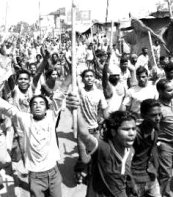 In popular belief, democracy is about positive practices: freedom, justice, equality. The democratic processes take us closer to those goals. I have written numerous articles on different positive aspects of democracy earlier. However, if you look at it, in practice, democracy is not just about positive achievements. A lot of its success depends on its ability to keep negative outcomes away. Continue reading
Posted in Economy, Philosophy, Politics
The intention of Ikiru
 Beyond the legendary samurai tales, if Kurosawa is remembered for one film, it is Ikiru. The genesis of this film, in Kurosawa’s own words, was in his meditations upon death. While the philosophical intent of the film is elaborately discussed, Kurosawa made this film for another practical reason– to create a vivid and realistic picture of contemporary Japan. This idea was conceived immediately after Rashomon’s critical success. Continue reading
Posted in Film, Philosophy
The composition of Ikiru
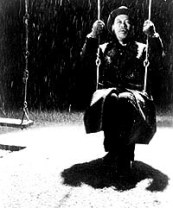 As with Drunken Angel and High and Low, Kurosawa choose to break Ikiru in half. Like many other Kurosawa films, the discussion here is between real and illusion. In the first half, we see what is real- our hero’s reactions to his approaching death. The second half is illusion- the reactions of others, their excuses and their rejections. Perhaps for this very reason, the camerawork in the first half and that in the second half is different. Continue reading
Posted in Film, Philosophy
Citizen media and mass media
 Albert Einstein had said, “Imagination is more important than knowledge”. People’s media is as old as civilization. It has always been there, while mass media came up only after renaissance. The dis-empowerment and injustice reinforced and sustained through mass media has always been resisted by civil initiatives for creating alternative modes of communication and information. Continue reading
Posted in Philosophy, Politics
 सौरभ राय | Sourav Roy