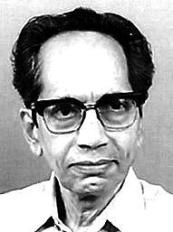
 “To provide the most educative and enlightening material. To promote right thinking and Living among people. To strengthen the moral fibre of the society. To help acquire and sustain knowledge, success, health and happiness.” – this is the Mission Statement of Wisdom Magazine, a low-priced magazine for kids (and adults like me). Wisdom was founded in 1973, and since then edited by Dr. K V Govinda Rao, until recently, when the visionary left us. Continue reading
Category Archives: Culture
Long Live Wisdom!
For the glory of the cause!
 “When death knocks the door, what does a man do?”- a question addressed in numerous works of fiction and cinema. But life is no fiction. However, real events can surpass the levels which even the best fictional works can’t dare to reach. In the year 1930, Bhagat Singh’s father had submitted a mercy petition to the British government. Bhagat Singh’s reply to his father was disillusioning. What, however, sends further shivers down the spine is reading the petition Bhagat Singh himself filed next. Continue reading
Posted in Culture, Personal, Philosophy, Sankalp
Dreams have no intention, composition or punctuation!
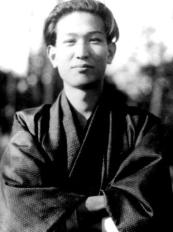 When Kurosawa, aged 84, wanted to make a film on his dreams, people knew it was going to be a masterpiece. The prospect of sitting and being two hours’ worth of a person’s dreams is, on the face of it, not a very pleasing one. One’s dreams properly interest only oneself. Making it worthy is indeed a tough task, which none other than Kurosawa could have accomplished. Dreams, was intended to be Kurosawa’s last film, although he made two more films later. Continue reading
Posted in Culture, Film, Nature, Philosophy
The Indian Machiavelli?
 While Machiavelli remains one of the brightest names in the field of political science, Chanakya, the Indian Machiavelli- as Wikipedia introduces him, in spite of the fact that his works predate Machiavelli’s by about 1,800 years- the founding father of the Mauryan Empire after defeating the Nanda and Alexander’s forces, remains underrated. Continue reading
The composition of Throne of Blood
 The composition of Throne of Blood is unique in several ways. This film essentially uses the Noh elements of Japanese theater. Noh is a beautiful style, usually scary. Here the degree of compression is extreme, and is full of symbolism and subtlety. Here, style and story are usually one. The Noh actors walk around on stage in a special heel to toe manner. The world of Noh is both closed and artificial. I guess the limitations of the characters of the film attracted Kurosawa to include Noh elements in the film. Continue reading
 सौरभ राय | Sourav Roy
