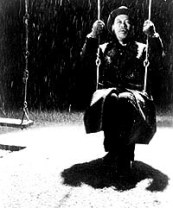
 As with Drunken Angel and High and Low, Kurosawa choose to break Ikiru in half. Like many other Kurosawa films, the discussion here is between real and illusion. In the first half, we see what is real- our hero’s reactions to his approaching death. The second half is illusion- the reactions of others, their excuses and their rejections. Perhaps for this very reason, the camerawork in the first half and that in the second half is different. Continue reading
Category Archives: Film
The composition of Ikiru
Posted in Film, Philosophy
The punctuation of Seven Samurai
 The samurai journey to the village is a mosaic of tiny scenes where they are being followed by Mifune in a series of wipes, who wants to join them. When they reach the village, Mifune utters a prophetic and much mature remark- “Whew! what a dung pile. I’d certainly hate to die in a place like that.” Continue reading
Posted in Film, Technology
The composition of Seven Samurai
 Seven Samurai is composed of three distinctive groups of people- the farmers, the bandits and the samurai. There are over a hundred farmers, forty bandits, and just seven samurai. Kurosawa keeps these three units apart in various ways. Continue reading
Posted in Film
The inception of Seven Samurai
 Historically, Japanese cinema has heavily dealt with the dilemma of a person entrapped between love and duty. Many Japanese directors like Ito, Itami, Yamanaka, Mizo and Kobayashi have dealt with this theory in a historic backdrop. Well, Kurosawa goes a level deeper in Seven Samurai and conveys to us that there never was such a contest. The contest is indeed, between the real and the pretended. Kurosawa delights in resenting the pretended- that is, the illusion, and delights in revealing it as illusion. Continue reading
Posted in Film, Philosophy
The intention of Rashomon
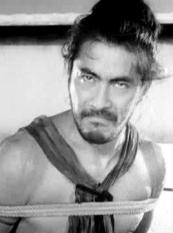 All the greatest film critics over the past 60 years have interpreted Rashomon on their way. Some conclude by saying that truth is subjective. Some even prove the woodcutter to be the villain in the great Rashomon murder mystery, since he was the one who claimed to find the husband’s body, and he was the one who told the bandit’s version of the story. While the interpretation of Rashomon is a matter of great debate, the intention of Rashomon is extremely subtle and beautiful. Continue reading
Posted in Film, Philosophy
 सौरभ राय | Sourav Roy